For many machine manufacturers and robotics companies, the sales technology conversation still starts and often ends with one question: Which CRM should we choose?
In our work bringing the SCOUT platform to industrial manufacturing teams, we've consistently seen organizations evaluating basic CRM platforms as if the decision alone will modernize their sales operation. That hesitation signals a deeper challenge: much of the manufacturing sector is still operating with sales infrastructure designed for a very different era.
This lag is exactly why we've focused on industrial manufacturing. These companies face long sales cycles, capital-intensive buying decisions, and rapidly changing market conditions. Surviving and growing now requires more than a system of record. It requires intelligence.
This article explores why CRM-first strategies fall short in modern manufacturing sales and what you should be doing instead.
What CRMs Were Built to Do / What They Weren't
CRMs were designed to answer one core question: What has already happened?
They excel at:
- Storing account and contact information
- Tracking sales activities and deal stages
- Reporting on historical pipeline and performance
For many industries, that's sufficient. Manufacturing, however, presents unique challenges:
- Buying cycles can stretch 12–24 months
- Demand is triggered by operational, regulatory, or capital events
- Opportunities emerge long before a buyer fills out a form
A CRM can only reflect what a sales rep already knows. It cannot surface opportunities that haven't yet entered the system.
The Limits of a CRM-First Strategy in Manufacturing
1 - CRMs Rely on Manual Input
Sales reps must discover, qualify, and enter opportunities themselves. In manufacturing, this often means deals are identified late—after competitors are already engaged.
2 - Data Goes Stale Quickly
Facility expansions, leadership changes, supplier shifts, and capex decisions can happen without ever touching your CRM. By the time records are updated, the buying window may already be closing.
3 - No Visibility Into the Broader Market
CRMs have little awareness of:
- Non-customers that match your ICP
- Early operational or financial signals
- Market-wide shifts impacting demand
As a result, teams over-focus on existing pipeline and under-invest in proactive opportunity creation.
Industry data shows that over 60% of B2B sales reps spend the majority of their time working deals already in the CRM, while missing higher-intent accounts still outside the system.
Why Manufacturers Need Intelligence, Not Just Infrastructure
Modern manufacturing sales requires more than record-keeping—it requires continuous market awareness.
AI-driven sales intelligence platforms extend beyond the CRM by:
- Monitoring thousands of external signals across industries and facilities
- Identifying accounts entering buying cycles before outreach begins
- Prioritizing opportunities based on timing, not just fit
This intelligence layer doesn't replace CRM—it makes it effective.
Real-World Example: Early Signals vs. Late Entry
Consider two sales teams selling industrial automation equipment to the same automotive parts manufacturer planning a $15M facility upgrade:
Team A - The Traditional CRM Approach
Month 1: No activity (buyer not in CRM)
Month 2: No activity (buyer researching independently)
Month 3: No activity (buyer attending trade shows, talking to competitors)
Month 4: Lead enters CRM after downloading a white paper
Month 5: First sales call scheduled
Month 6: RFQ issued to 4 vendors including Team A
Result: Team A is one of four competitors, responding to pre-defined specs they had no input on. Win probability: 25%. Average discount to close: 18%.
Team B - The AI-Enabled Intelligence Approach
Month 1: AI flags company after detecting:
- 3 automation engineer job postings
- $12M equipment financing secured
- Facility expansion permit filed with county
Month 2: Sales rep reaches out referencing expansion plans, offers facility design consultation
Month 3: Multiple conversations about production bottlenecks, ROI models, integration requirements
Month 4: Buyer invites Team B to provide input on equipment specifications
Month 5: Team B's recommendations incorporated into internal requirements
Month 6: RFQ issued—specifications favor Team B's solution
Result: Team B shaped the buying criteria before competitors knew the opportunity existed. Win probability: 65%. Average discount to close: 7%.
The 4-Month Advantage
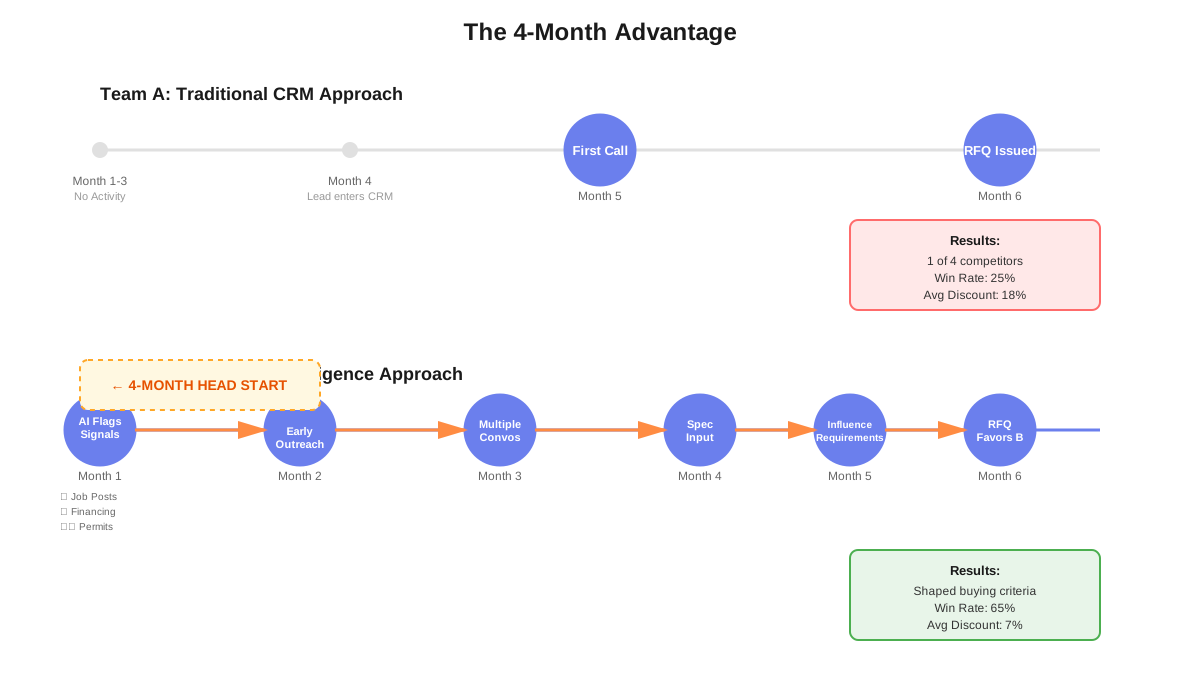
That 4-month head start is the difference between shaping the deal and chasing it. And it's only possible when you have intelligence working ahead of your CRM.
What This Means for Your Sales Operation
If you're still relying solely on CRM as your sales intelligence engine, you're already behind. Here's what needs to change:
Stop Waiting for Opportunities to Come to You
Traditional approaches—trade shows, inbound leads, referrals—are necessary but insufficient. By the time a prospect reaches out, they're already 57% through their buying journey (CEB/Gartner research). You need to be present earlier.
Start Building Your Intelligence Stack
Think of your sales technology in layers:
- Intelligence Layer: Identifies who to talk to and when (AI-driven market intelligence)
- Execution Layer: Manages outreach and relationships (CRM)
- Enablement Layer: Equips your team with the right content and talking points
Most manufacturers have layer 2. Some have layer 3. Very few have layer 1—which is exactly where competitive advantage lies.
Prioritize Signal Over Storage
Your team doesn't need more fields in Salesforce. They need answers to:
- Which facilities are expanding production capacity?
- Which companies just secured new funding rounds?
- Who's hiring for roles that indicate equipment purchases?
- Which regulatory changes will trigger capital investments?
The winners in manufacturing sales are the ones who answer these questions systematically, not occasionally.
Where to Start: Building Your Intelligence Advantage
You don't need to abandon your CRM or overhaul everything overnight. Start with these practical steps:
Immediate Actions (This Week)
- Audit your current intelligence sources: What signals are you monitoring? How systematic is your approach?
- Identify your highest-value early indicators: What happens 6-12 months before your buyers typically engage?
- Map your blind spots: Which parts of your addressable market have zero visibility in your current CRM?
Short-Term Investments (This Quarter)
- Implement basic signal monitoring: Set up Google Alerts, track industry publications, monitor government contract awards
- Create a signal-to-action workflow: When you detect a trigger event, what happens? Who follows up? How quickly?
- Measure leading indicators: Track not just pipeline, but signal coverage across your ICP
Strategic Transformation (This Year)
- Evaluate AI-powered intelligence platforms: Solutions like SCOUT that continuously monitor your market and surface opportunities
- Integrate intelligence with CRM: Ensure signals flow directly into your execution layer
- Shift from reactive to predictive: Build forecasts based on market signals, not just existing pipeline
The gap between "we should probably look into that" and "we have a systematic process for that" is where market share changes hands.
The Bottom Line
Choosing the right CRM is no longer enough.
Modern manufacturers need systems that surface opportunity before demand is obvious, adapt to real-world signals, and guide sales teams toward the right accounts at the right time.
AI is no longer a competitive advantage in manufacturing sales—it's a survival requirement.
The question isn't whether to build intelligence into your sales operation. It's whether you'll do it before your competitors do.